Showing posts with label Lamentations of the Flame Princess. Show all posts

Tuesday, February 14, 2017

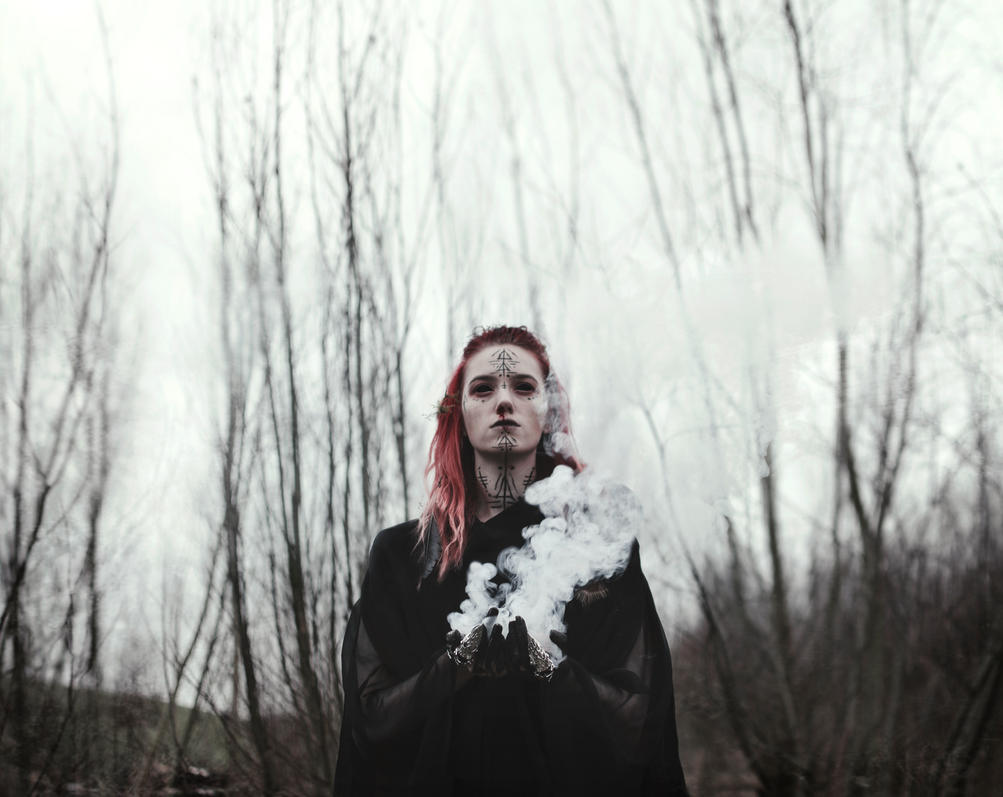
Ruminations of the Rune Priestess

A buddy of mine is planning a viking-themed hex crawl using Lamentations of the Flame Princess. He wanted some help on fluffing out the classes, so I obliged. The rough draft of classes to follow:

Ruminations of the Rune Priestess


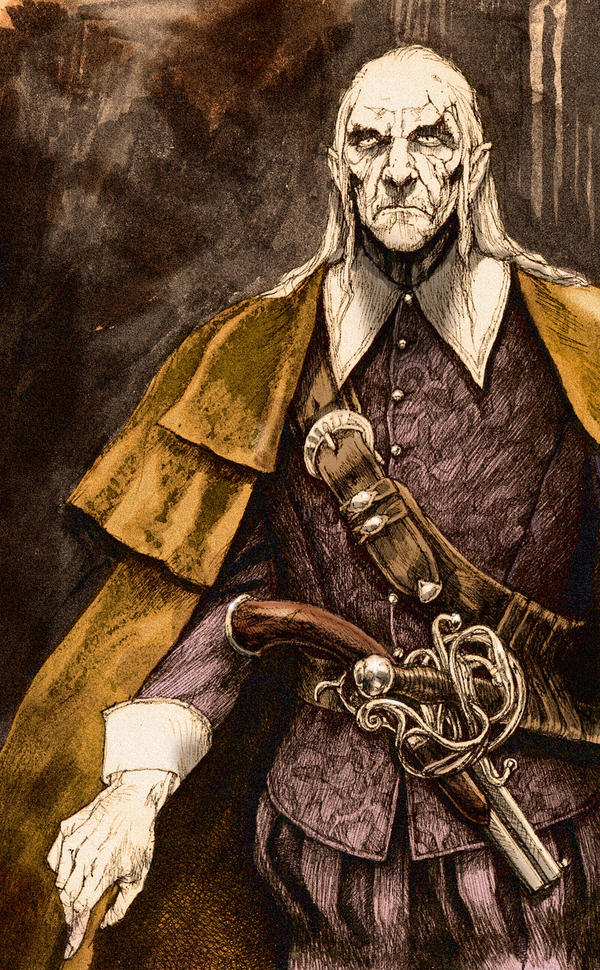
Myrkr, by TheFoxAndTheRaven


Ability Scores generated per normal. Classes are as follows:

Thegn: The warrior class. Maps to fighter in every way.

Goethi: Seers and spiritual advisors. Maps to cleric. Shuffle the spell list around to make it more of a divination/will of the gods type character.

Seidermenn/Volva: Sorcerers that are distrusted by society at large. Volva at least have the respect of being wise-women, but as sorcery is seen as women's magic, Seidermenn are doubly stigmatized. Maps to Magic User.

Carl: low-born men who haven't the martial training of the warrior class, but make themselves useful in other ways. Maps to Specialist.

Berserker: warrior-shaman that follow bear totems and work themselves up into a frenzy before battle. Maps to dwarves as a class, but loses Architecture. Instead, they get a bonus to AB and Damage when they work themselves into a rage. This bonus starts at +3 at level 1, and increases by 1 at levels 4, 7, and 11. Working themselves into a state of berserk takes a full round and can last for a number of rounds equal to Constitution mod+level.

Wolf-Skins: Warrior-shaman that follow a wolf totem. Maps to halfling, but they lose the size restriction and gain access to the same combat options as a fighter.

Blooded: Men who can trace their ancestry back to the Alfar or other land spirits. Maps to elf, save that they use Charisma as a casting stat instead of Intelligence and cannot make use of spell research. Their powers are innate. Like Seidermenn or Volva, if their status is known they will suffer a stigma.

Changes to Equipment
The cost of items are unchanged. Plate armor does not exist. Chain and leather only, though adding a helmet is worth +1AC and costs 25SP. Horses do not wear barding in this period. Lances, Polearms, Mancatchers, Rapiers and crossbows as listed in the standard equipment list are unavailable. There are no ships larger (or more expensive) than a Cog. Otherwise, use common sense for equipment availability.
I'll dabble with the spell list later, but this is enough to get us started.

Wednesday, August 3, 2016

The Adept: Revisited (A Class for Lamentations of the Flame Princess and other Old School Fantasy Games)

A while back I propose an adept class that was ripped off from inspired by force-users from the star wars canon. I've been tinkering with an update, so I figured I'd just repost the whole thing. 

The Adept

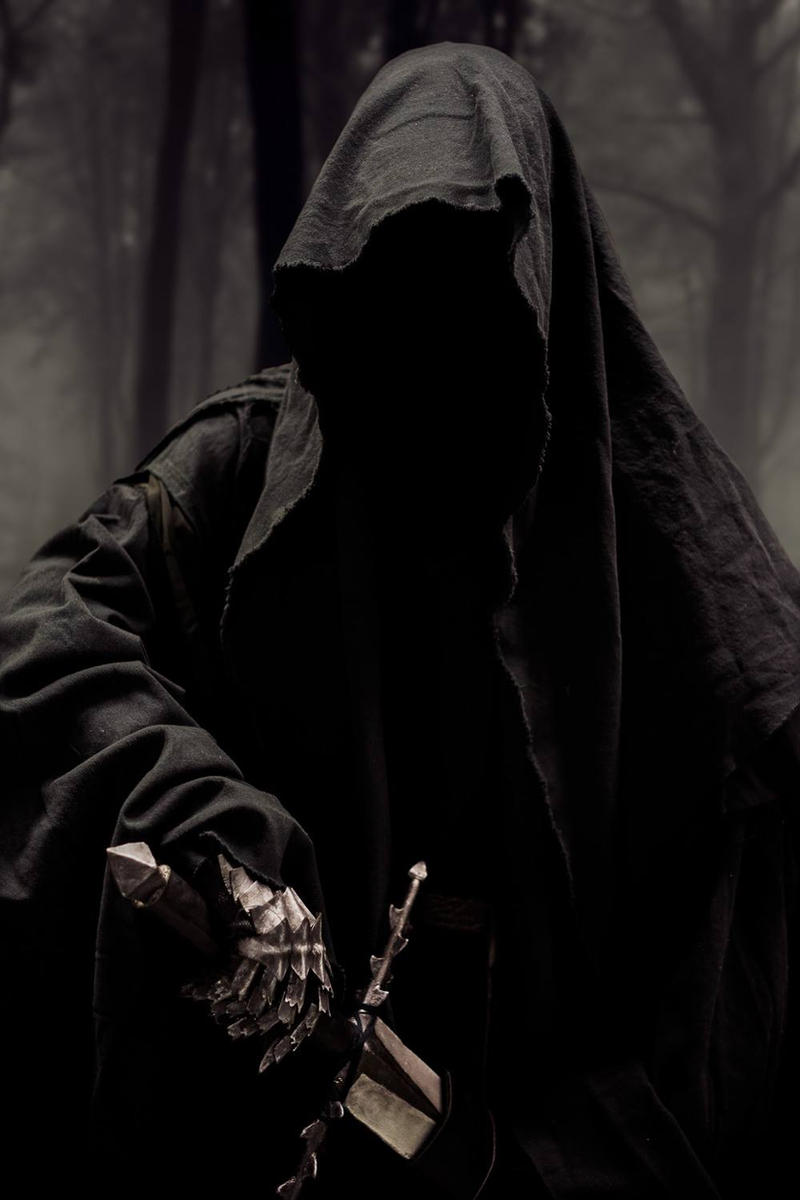
Nazgul by Martawadman
XP and Saves as Magic-User, d6 HP per level. Same combat options as Fighters, Dwarves, and Elves. Must choose to be either Chaotic OR Lawful.

Where others search outwardly for answers, the adept looks within. Through secret rituals, rigorous discipline, mind-altering drugs and intense medication, they walk the wyrding way giving them preternatural abilities and influence on those around them.

The Wyrding Way:
Adepts can channel the wyrd and use it to add an extra die to any ability, save, attack, or damage roll they must make, or can be rolled and added to their AC for a single combat round (from the beginning of their turn to the beginning of their next turn). At first level, this begins as a d4 and goes up by one die-size every four levels. d6 at 4, d8 at 8, d10 at 12, d12 at 16. This can be used on any roll as often as the adept wishes, but every time a 1 appears on either die rolled, their Wyrd goes down one die size. If it is reduced to less than a d4, their will is depleted and they can summon it no further until they've had time to rest and perform the proper meditations (treat the same as a magic-user regaining their spells).

Reaching Out:
No power is without temptation.Though different sects and philosophies will argue as to where originates the wyrd, they can all agree on one thing - it is a power that comes from beyond the adept. The mind is a but a focusing lens, the body an empty vessel. Particularly ambitious (or foolhardy) adepts can attempt to drink deeply of the wyrd -- and at their own peril. On any single roll, the adept may attempt to roll equal to or under their Wisdom on a d20. On a success, they increase their Wyrd die for any checks made that round, including giving them a d4 even after they have spent their powers. If their die is already at d12, the die becomes a d20. However, doing this is not without terrible price. If the Wisdom roll fails roll the die they would have received. The number on the face is temporarily subtracted from their Constitution. If this would adjust their HP, remove any lost hit points from their current HP first. If either their HP would be reduced to zero, or their Constitution would be reduced to zero, the character is slain. If the character survives, their constitution will recover at a rate of one point per day but cannot be restored any other means (including magical).


Friday, July 29, 2016

Simple Bards for Lamentations of the Flame Princess (Or Other Old School Fantasy Games)

The bard is an interesting character concept. On the one hand, it's got a definite style and flair of its own. On the other, there's a number of nagging issues that make it a poor fit for a game with classes centered around the Big Four (Fighter, Cleric, Magic-User, and Thief).
  • Main draw is that it does a little bit of everything, which isn't quite as bad for the magic-user and fighter, but sucks for the thief - especially since "skill guy" is the specialist's shtick in LotFP. 
  • Magical Music as a class feature is either something you either love, or despise.
  • As I wrote once before, creating a class whose abilities are social in nature is weird in a game without strict social mechanics. 
So what can we do?  After some thinking, the first decision I made was to remove the idea of bard as a class entirely. Instead, we add another skill to the specialist's repertoire, making it another possibility to mix and match with rather than a separate class that has significant overlap with specialists anyway.
Inspire: through impassioned speeches, battle music, or a booming voice of command, you can affect the hearts and minds of those around you. On a success, you can add the number rolled as a modifier on a reaction roll. On a failure, you roll 3d6 instead of 2d6 and drop the highest die.

If used in battle, you can use your action to play music, orate, or command in order to aid your allies. The number rolled can be applied to one of the following, at your discretion: attack rolls, damage, armor class, saving throws, or morale checks. This will apply to all intelligent allies within earshot capable of understanding your message. If a roll of 6 would result in a failure, roll a second d6. If the second roll is also a 6, it forces all allied NPCs to make an immediate morale check. 

Alternatively, you can choose to try to demoralize your opponents instead, applying the number rolled as a negative modifier to your opponent's attack rolls, damage, armor class, saving throws, or morale checks. This will apply to all intelligent enemies within earshot capable of understanding the message. If a roll of 6 would result in a failure, roll a second d6. If the second roll is also a d6, your attempt has the opposite effect instead giving a +d3 attack bonus to any enemy that would have been affected.

Either effect consumes the character's whole action and remains in affect until the character's next action. If the character is attacked, silenced, or otherwise prevented from communicating with their intended audience, the effects cease immediately.
Not only does that make "bard" a potential variant of the specialist without adding an additional class, but with the lateral advancement rules, it could also be a nice way to work on a fighter character who is a warlord/commander type. More traditional bards can also attempt to either multi-class with a magic-user to gain spells, or make use of the arcana skill to represent their dabbling.


Monday, July 25, 2016

Multi-Classing for Lamentations of the Flame Princess and other Old School Fantasy Games

Continuing the last post's theme of giving more character options within the framework of LotFP specifically, today we'll be talking about multi-classing rules.

I have suggested before an idea for hybrid classes that worked reasonably well, but they still wound up in many ways being too inflexible for what I wanted them to do. They still make for a nice base upon which to build custom classes, but today we're doing something different.

Multi-Classing for LotFP

Creating a multi-classed character is relatively simple. Any two classes can mix, with the following exceptions
  • Classes with opposite alignment requirements (you can't as a character have multiple alignments)
  • Racial classes cannot mix with other racial classes (No multi-classed Halfling/Dwarfs)
  • Spell-casting classes cannot mix (no multi-classed magic-user/clerics, magic-user/elves, or cleric/elves)
After two classes are chosen, you can figure out the combined features as follows:
  • The character gets all of the class-features of both classes (advancing AB, combat options, skills, spell slots, or other special abilities).
  • The XP for each level is the combined total of both classes. (A Fighter/Magic-User would cost (2,000+2,250) 4,250xp to get to level 2.
  • The HD and Saving Throws are the worst of the two classes. Add up the first level saving throws and choose the set with the worst (read: highest total, as lower is better). If they are equal the player may choose which set they would prefer but may not switch at any time.

Multi-Classing After Character Creation.

Characters can optionally choose a second class after character creation, but the road is a difficult one. The character's advancement in their main class is frozen, but advancement continues using their current XP track until the other class has caught up. Each time they would have leveled up their primary class, they instead level up their secondary class and then drop back down to the bare minimum amount of XP required to be the current level in their current class.

A level 6 fighter has a minimum of 36,000xp and needs 64,000xp to get to level 7. They decide to multi-class into specialist. Each time they would hit 64,000xp, they gain 1 level of specialist and are dropped back down to 36,000xp until they are level 6 in both fighter and specialist, at which point they continue advancing as a normal multi-classed character.   

The character gains all the benefits of the secondary class as a normal multi-classed character as described above. HD are determined by the lesser class each level. If the primary class has the smaller HD (a Specialist who is now multi-classing into Fighter), they can re-roll their HP each level and take the new result if higher, but may not add additional dice until that class advances. If the HD of the secondary class is the lower, then they may roll the secondary classes's HD as they gain it, but will not increase their HP until the secondary class's roll is better than their primary.

Our level 6 fighter has a statistically low 30HP, normally rolling 1d8 per level. Each time they gain a level of specialist, they may roll their specialist's HD (1d6 per level), but won't increase their HP at all until the roll on the specialist's HD is greater than 30 (after Con mods).

Saves are determined in a similar fashion. If the primary class has worse saves than the secondary, then saves are simply frozen until the character continues advancing as normal. If the secondary class has worse saves, then the character's saves don't improve until the secondary class's saves are better than their current saves, at which point the new saves are recorded. 


Multi-classing a character is a big deal, mechanically and requires significant sacrifice. This is even more pronounced if the shift comes later in a character's career. Between multi-classing and lateral advancement, however, I now feel fairly confident that I can create more or less whatever I could want inside of the LotFP framework without having to push for a classless style system as is sort of popular at the moment.

Friday, July 22, 2016

Lateral Advancement for Lamentations of the Flame Princess and Other Old School Fantasy Games

One of the strengths of OSR games is how simple the advancement scheme tends to be. No worrying about builds or feats or whatever. You just gain your xp, roll your Hit Dice, and go. The B/x style class scheme tends to help this quite a bit. They are nice and broad, defining your character by your skill set rather than forcing specific fluff to make its way into your character. Your Fighter could be a wandering mercenary, an archer, a tribal barbarian, or a chivalrous knight depending on how you want to picture them.

The big four (Fighter, Magic User, Cleric, and Thief) do an excellent job both of providing broad umbrellas to build characters under and providing some niche protection. As I've written before, though, there are certain character concepts that just don't fit comfortably under any of the above. How do you handle a Ranger who can actually fight? How would you build Conan under such a system? Or Elric?

This brings me to my idea for Lateral Advancement for LotFP. OSR already works with the understanding that not everyone advances at the same rate. More powerful classes already cost more XP to advance, and in AD&D multi-classing was literally just "take both classes, divide XP between them." The premise "choose to advance slower in exchange for more power" is baked in from the start. I think there was a kernel of something useful in there, and I've expanded it here.

Lateral Advancement

Any time a character would gain a level they can choose instead to purchase a lateral advancement, burning the XP they would have used to gain said level in exchange for one of the following non-standard benefits.
  • Increase an Ability Score: the character may increase any one ability score by 1 point if they can explain how their character improved it. No score can ever be improved in this fashion by more than 2 (read: a character who rolled 15 strength can only purchase two increases bringing it to 17), but may be purchased separately for each of the character's ability scores as desired. 
  • Increase a Skill: the character may add a single pip to any one skill if they can explain how they learned it. Obviously, this is useless for Specialists. 
  • Increase Attack Bonus: the character may increase their base attack bonus by 1. Obviously, this is useless for Fighters.
  • Improve a Save: the character may improve any one category of saving throw by 1. This may be purchased up to twice for any single save, but may be purchased separately for each save as desired. Obviously, less useful for demi-humans.
  • Learn a new class ability: In my home campaigns, I often design rituals and other special abilities that can be gained through play but not necessarily earned automatically as a class ability. If the Fighter got inducted into a berzerkergang cult, this would be his way to buy the ability.   
Characters who purchase a lateral advancement are immediately set back to the minimum amount of XP required to have reached their previous level.

 In LotFP, a Fighter gains level 4 at 8,000xp and 5 at 16,000xp. Upon gaining 16,000xp the Fighter could choose to take a lateral advancement and would then be back at 8,000xp again having burnt the remaining as the cost of advancement. 

I rather like the above as a setup. It allows characters to dip their toes into different fields without being in any danger of overshadowing anyone else's niche as well as giving the DM a way to let characters earn special abilities they want without just handing them out willy-nilly. You want your Fighter to be a Paladin? Do good deeds for the church  and in the course of it, I'll give you the ability to learn some paladiny abilities. Now I can do that without being unfair to the other fighter who is perfectly happy just smacking things with a sword. It's also perfect for when you have a character who just wants a skill to fit a concept (survival comes up a lot with fighters who want to be barbarians or rangers) without having to do some kind of multi-classing setup or hacking together an entirely new concept. Want to be a Witch-Hunting Specialist? Increase your Save vs. Magic a couple times to keep an edge on your prey.

If you're wondering why there's no "purchase magic" to go along with the options for skills and attack bonuses, it's because I'm already using Ten Foot Polemic's Arcana Skill.

Would you use it? Tell me what you think.

Sunday, May 1, 2016

Dying Stylishly (A Shoutout)

A while back I posted some advice to someone on one of the 4chan OSR threads that crop up about starting to get traction for the game they wrote. Among other advice, I mentioned the usefulness of a blog and some minor insights I've gathered from developing 'Bastards. I've now come across the blog developed, and would heartily recommend checking it out.

Dying Stylishly is the dev blog of Emmy Allen, whose most recent project is the OSR-based Wolf-packs and the Winter Snow, a prehistoric Weird role-playing game that could be most easily described a a heavily modified LotFP wrapped around an ice-age setting. It's some very cool work and has a handful of tricks up its sleeve. Definitely worth taking a look into. If I can get the gaming time in, I may well do a review on it later. It's currently available as a Pay-What-You-Want option at DriveThruRPG, which includes absolutely free as an option so you have no excuse not to check it out. The blog itself is only a couple weeks old now, but has maintained a post per day so far. The content covers a whole mess of gaming topics, from LotFP to Vampire the Masquerade, but also hits on Wolf-Pack topics and updates. I look forward to seeing where she goes with it.

Go check it out and send some love from a scoundrel.

Monday, April 11, 2016

The Adept - A Class for Lamentations of the Flame Princess (or other Old-School Fantasy Games)

I've had an idea for jedi adepts for LotFP for a while, as they bring to the table something different than either a cleric or magic-user traditionally. With the Star Wars franchise returning to theaters for the next foreseeable forever, I figured I might as well.

The Adept

Nazgul by Martawadman
XP and Saves as Magic-User, d6 HP per level. Same combat options as Fighters, Dwarves, and Elves. Must choose to be either Chaotic OR Lawful.

Where others search outwardly for answers, the adept looks within. Through secret rituals, rigorous discipline, mind-altering drugs and intense medication, they walk the wyrding way giving them preternatural abilities and influence on those around them.

The Wyrding Way:
Adepts can channel the wyrd and use it to add an extra die to any ability, save, attack, or damage roll they must make, or can be rolled and added to their AC for a single combat round (from the beginning of their turn to the beginning of their next turn). At first level, this begins as a d4 and goes up by one die-size every four levels. d6 at 4, d8 at 8, d10 at 12, d12 at 16. This can be used on any roll as often as the adept wishes, but every time a 1 appears on either die rolled, their Wyrd goes down one die size. If it is reduced to less than a d4, their will is depleted and they can summon it no further until they've had time to rest and perform the proper meditations (treat the same as a magic-user regaining their spells).

I've been playing with an idea for a corruption lightside/darkside mechanic for the Adept to play with the Lawful or Chaotic choice, but I haven't settled on it yet. Maybe in a future post.

Monday, March 14, 2016

The Hunter - a Class for Lamentations of the Flame Princess (or other Old-School Fantasy games)

A simple martial class that does a decent job representing anything from a Solomon Kane style witch-hunter, to a dedicated dragon-slayer or duelist.

The Hunter

Solomon Kane by Draldede
XP, Saves, and HP as a fighter. Uses fighter combat options (but not ascending AB). 

Where the fighter is an unmatched engine of slaughter, the Hunter is specialist, forsaking general combat prowess in exchange for absolute mastery against their chosen prey.
Prey:
Hunters begin with 3 points to spend on their choice of prey, a type of enemy against which they get a number of bonuses. Good prey categories include: Humans, Dwarves, Elves, Spirits/Spectres, Demons, Unintelligent Dead, Vampires, Magic-Users, Were-things, and so on.

Hunters can only choose a type of prey after they have spent some time studying it and have fought it in combat. On each level after the first, they gain 2 more points that they can spend on new or existing categories of prey, though the original conditions apply. To go from Vampires 1 to Vampires 2, you have to find, study and fight another vampire. The maximum amount of points they can assign to a given category of prey is equal to their current level.

Whenever they are making rolls against an enemy of a type designated as prey, they gain their ranks as a bonus to any ability, saves, attacks, or damage rolls against them. If a character had Sorcerers 3, they would gain a +3 to attack and damage rolls against them, saves against them, or any ability rolls that are directly concerning or in opposition to them.
The hunter can definitely outclass a fighter against the very specific enemies they have dedicated themselves to, but the fighter is definitely the more powerful opponent overall. This is particularly true if they have started to spread themselves out and have less than their maximum bonus at any particular level.
If you try to bring this into some other game, be sure to note that in LotFP only fighters gain attack bonuses normally. You may want to tone the prey bonuses down for games where everyone advances in their To Hit.


Tuesday, August 18, 2015

The Brute - A Class for Lamentations of the Flame Princess (or other Old School Fantasy Games)

Brutes are freaks of nature. Whether mutations born of fell magic, unspeakable parentage, or some unseemly devolution, Brutes are born cursed and misshapen. Their bodies are twisted parodies of the human form. They are huge and powerfully built, in some ways closer to ape than man. They often possess secondary characteristics that put people off - malformed or asymmetrical features, jagged teeth, unnaturally thick skin or hunched backs.
 

When a human child is born a brute, they are normally slain at birth or left in the woods to die of exposure. When a child does survive to adulthood, they are changed for the experience. Their whole lives spent fighting for survival, they are in many ways closer to animal than human. Even when calm and personable, there is something unmistakably savage and predatory about them.

Brutes can use the same Fighter-class moves as Elves and Dwarves, but do not advance in Attack. For XP, and HP, use the table below.

LevelXPHPSneak AttackStrength Mod
0-1d10

101d10+1
22,5001d10

35,0001d10
+1
410,0001d10

520,0001d10+1
640,0001d10

780,0001d10
+1
8160,0001d10

9320,0001d10+1
10480,0003**

11640,0003**
+1
12800,0003**

13++160,000/lvl3**/lvl+1
As they advance in levels, they learn to better use their size and ferocity to their advantage. They increase their Strength Modifier and Sneak Attack when indicated on the table above. This could mean that even with only 14 Strength, a level 11 Brute could have a +4 modifier for all purposes.

Friday, July 31, 2015

House Rule: Duel Wielding

I've never liked the idea that duel-wielding gives you twice as many attacks. Having two weapons doesn't make you attack twice as quickly, and having two attacks per round is by comparison such a good option that it's almost always better than having the +1AC or whatever that a shield would have given you.

My current compromise:
When using two weapons, roll your attack as normal. If you succeed, roll the damage of each weapon. Keep the highest.

This gives a slight bonus without being ridiculously better than a two-handed weapon or shield. I'd like to incentivize using smaller weapons with this - or at least, using something like "Sword and dagger" rather than "I'm duel-wielding longswords." I'd prefer to do it without having to resort to some kind of "one weapon has to be shorter than the other" kind of rule.

Tuesday, July 28, 2015

Under/Over

Continuing my LotFP tinkerfest:
My biggest bugbear with the current setup is that some rolls are roll-over, others are roll-under. This bothers me, as players get confused as to which way the rolls should go.

As it stands, attack rolls and saves are roll-over. Ability rolls and skills are roll-under. I'd like to align them all in the same direction:

Option A: Roll Over

Move everything to a roll-over system. Attack rolls can stay the same (d20+AB vs AC). Saves would be the same (equal to or greater than your save number).

Ability Score would have to be roll 1d20+Ability. 21+ is success.
Skills would have to be 1d6+skill. 7 is success.

Benefits:

  • Rolling high is by virtue of language and conditioning intuitively good. "Natural 20" automatically triggers something in most gamers.
  • Ability Scores can be directly opposed, with each side rolling d20+Ability to determine the winner.

Drawbacks:

  • Double digit+double digit math is something that will produce an "uhhhh" every time it is rolled.
  • Defeats the point of recording skills in pips, as part of the charm was the visual representation on the sheet actually looking like the d6, and needing that or under.
  • 21 and 7 sound arbitrary (even if they aren't), and begin to stray into TN/DC territory, which I'm not a fan of for this kind of game. The simplicity of roll-under is that what you see is what you need.
  • Save numbers go down to improve instead of going up, which is slightly counter-intuitive. 

Option B: Roll Under

Attribute and Skill rolls remain as they are now. Saves are easily converted to roll-under: you just take what they are now and subtract them from 20. A sheet could have the updated saves and no one would notice the difference.

Attack Bonus would need renamed (it's no longer a bonus), but is functionally the same. If you had +2 before, it would now just be a roll-under of 2. AC would go back to TSR era "lower is better."

Your attack roll would then be a d20  with the goal of rolling under your Attack Score+EnemyAC. 

Bonuses can universally be assumed to apply to the score itself, rather than the roll, so a +1 bonus is still good.

Benefits:

  • No math required anywhere except the attack roll, but that always needs math unless you want to make a chart (Note to self: consider chart). What you see is what you need.
  • Pips on dice retain their charm.
  • All Stats go up to improve - except for AC? Hrm.
  • AC listed in other retroclones/TSR material can be used more or less as-is. 

Drawbacks:

  • "Roll low to succeed" is inherently less intuitive. "Natural 1" doesn't hit the brain the same way as "Natural 20."
  • Enemy AC now modifies your roll, instead of being the target you need to meet. Not sure if this is less intuitive. Could be fixed through a THAC0 style table, but that goes back into "is this more or less intuitive than the alternative? If you did go that route though, AC could be positive as well.
At present, I'm liking B more than anything, but debating whether a return to a THAC0 style chart is better or worse than weird AC mechanics.

Monday, July 27, 2015

LotFP Multiclassing/Hybrids

Last post, I was chewing on the way LotFP classes work. In the time between, I came up with the following. It needs some testing, but I like the idea:

LotFP Hybrid Classes

In addition to the four traditional classes, human characters can instead choose to play a hybrid class. Each hybrid consists of a blend of two of the core classes, gaining some of the strength of each but not the full benefits thereof.

Pick two of the following to gain your core benefits:
Cleric: Casts Cleric spells as a cleric of half their level. Cannot be combined with Magic-User.
Fighter: Gains all fighter combat options and begins with a +2 Attack Bonus, but their attack bonus never increases.
Magic-User: Casts Magic-User spells as a Magic-User of half their level. Cannot be combined with Cleric.
Specialist: Pick two skills. Each of these begin at 2 dots. One of these may increase each level.
If the character is a hybrid class that has spells, they will for all rules purposes (spells per day, learning spells, spell effects) be considered a caster of half their level. If you are a Cleric/X hybrid at level 10, you will in all ways act as though you were a level 5 cleric for the purposes of magic rules. You begin with no access to spells at level 1.

Saves will be identical to one of the parent classes. The player may choose which.

XP will be equal to the highest XP class x1.5. Thus, to get to level two a Fighter needs 3000, Cleric needs 2625, Magic-User needs 3375.

Niche protection shouldn't be an issue. Each of the core classes will always be better at their job than the hybrids. There is slightly closer competition with the demihumans but each demihuman gets a benefit that the hybrids can't and they universally have a lower xp requirement for what they are trying to do.

The applications of the above create a lot of interesting concepts. Paladins or witch-hunters could easily be fighter/clerics or even cleric/specialists.  Fighter/Specialist in particular opens up nice possibilities as a ranger or assassin. Magic-User/Specialist could even be used for a bard, god forbid.

I'll have to test this more before I decide if I like it, but it would actually handle most of the concepts I was considering making alternate classes for without deviating much from the core rules. 

Friday, July 17, 2015

Classes in Lamentations of the Flame Princess

We started a new Lamentations of the Flame Princess campaign the other day. I really love the system, and it's become my go-to for OSR style play. As my players get into it though, I find the itch to tinker again. I always have the itch to tinker. Right now, my attention is on classes.

(TL;DR, skip down to "What I'm Thinking.")

What I love about LotFP Classes:

There is an extremely fine balance between the classes in the game. Each of the four human classes are good at and completely own a specific niche.
  • Clerics are the only ones with access to clerical magic, which already grants them a lot of really cool stuff including the extremely important healing abilities and turn undead. 
  • Fighters are the only class that gains AB as they go, as well as having access to better combat options (AC+4 on parry, Press and Defensive fighting). This is the only version of a D&D style game I've played where Fighters really feel indispensable as the fighting class.
  • Magic-users get all of the eldritch goodies you'd expect, and some extremely flavorful spells.
  • Specialists are the best thief variant I've seen in an OSR game. The ability to put dots where you please lets you play them as the ranger, the cat-burgler, the explorer, the assassin, or whatever else. More importantly, they are the only class who gets points to spend in increasing abilities. 

The demi-human classes are somewhat less impressive, but each feel like a hybrid of something above.
  • Elves are essentially fighter-mages, as they usually are. The interesting thing is that they don't get advancing AB the way Fighters do, but they do get the extra melee options.They do however get an ascending Search die as they level.
  • Dwarves are treated much the same. No advancing AB, but they get the extra melee options, a larger hit-die, and can carry around more stuff. Stonecunning takes the form of an advancing Architecture skill.
  • Halflings.. uh.. are. halflings. In LotFP, they wind up with a 5-in-6 Stealth skill, an ascending Bushcraft skill, and a bonus to their dex and AC. [Edit: Raggi himself dropped a comment on my G+ for leaving out the halfling's saving throw bonuses! Woops.]

What I Hate about LotFP Classes:

Each class is indisputably the best at it's specific niche, but those niches are fairly narrowly defined. In normal B/x, it's pretty easy to add in new classes because every class already gets better at multiple things. In LotFP as written, it would be extremely hard to introduce another combat class that wouldn't step on the Fighter's toes. Giving other classes much in the way of skills winds up making the Specialist a little less.. special.

What I Want to Do:

I've got a few things I want to tinker around with but have held off because LotFP is on its own a pretty well-oiled machine. For instance - letting a character have some additional points to spend in their skills based on Intelligence modifier (Fighters wanting bushcraft is an obvious one. A dwarf in our current campaign made that exact request). I've also wanted to tinker in letting players specialize their character in one way or another - a Specialist variant that gets more offensive capabilities in exchange for reduced skill points; Paladin, Ranger, or Barbarian being Fighter variants that gain extra abilities in exchange for giving up some Fighter prowess; Variant or specialized magic users or clerics, and so on.

What I'm Thinking:

Fighter and Specialist are the two classes I'm most concerned with, as their whole value comes from being the sole class that advances in their niche. If I give another class AB, or another class skills, their relative value goes down. To solve this, I'm considering the following:

When the class in question is doing the thing they are supposed to do, they roll two dice and take the better result. Fighters would roll 2d20 on their attack rolls, keeping the higher. Specialists would get 2d6 on every skill roll, only failing if both fail.

A Paladin class then could take on Lay on Hands or a similar feature and still have advancing AB, but lose their 2d20 roll. Other classes could have skills, or an Assassin class could exist with its own features, but only get 1d6 for skill rolls. It would also make the Specialist better at whatever skill than any of the demi-humans using that same skill.

I can't decide if this is the way I want to do it. I'm not sure if it would make the classes too good by comparison, but it's definitely something I want to play around with.

Update: I have since come up with some potential solutions for all of this.

Saturday, November 29, 2014

Orc Quest: Episode 1: The Orcening

Tonight started our all-orc campaign, and it went exactly like I expected it to. "Off the rails" doesn't begin to describe it, but we didn't intend for it to be a serious adventure so all is well.

~Dramatis Personæ~

Justice Fist - A devout paladin of Gruumsh in the midst of a spiritual crisis. It is not enough to know that we Waaagh, but we must know why we Waaagh. Like the humie Socrates of ancient Greece, his questions quickly brought upon him the ire of his brother orcs, and soon he was cast out of the tribe for thinking too hard. Now he wanders the countryside in search of answers.

Cunnin Kidneyshanks - An unusually intelligent orc, what he lacks in physical ability he makes up for in brutal cunning and cunning brutality. Clad in his purplish burlap cloak, he followed Justice into exile - presumably because it would give him more opportunities to steal shit.

Raph - Big as an aurochs and about as intelligent, Raph is a one-orc wrecking ball. Growing up in the tribe, he quickly became fast friends with Cunnin and formed a kind of symbiosis. Where Raph's ridiculous strength would serve to protect his much scrawnier friend from much of the harshness of orc tribal politics, Cunnin's intelligence and guile kept others from taking advantage of his lumbering friend.

Taz Dingo - A mysterious orc with hypnotic hips, Dingo's power seems to lie in some form of pelvic sorcery. His reasons for joining the exiles are unknown to any but himself, but through the power of his peculiar tribal dance, Dingo has become the face of the party, power-sliding them through one sticky situation into another.

Boots: Cunnin's largely feral pet feline, Boots was found as a kitten and originally intended to be a light snack when it began to purr. Unable to bring himself to eat the fuzzy purring mass, Cunnin kept it for himself as a pet, where he learned to appreciate its own particular variety of brutal cunning. Boots can currently be found wherever Cunnin goes, usually napping in his haversack.
 
Together, they are The Green Team. 


Thursday, November 20, 2014

Sacred Cows in DnD

Yesterday I talked a bit about Iterative design and the inherent problem of The Ship of Theseus. That got me thinking about my own current projects. Specifically, my AD&D/Lamentations mash-up, and the nature of D&D itself.


The wonderful thing about the OSR movement is that it's a bit like Linux. The core mechanics of D&D are extremely versatile and can be made to do a ton of different things. Everyone in the OSR movement is basically working off the same Kernel, but everyone has customized their own distro to suit their preferences.

In layman's terms: we're all basically using the same engine to power the game, but every variant uses that engine in slightly different ways. And that's awesome. Not just because it allows for ridiculous flexibility, but because the end results are largely compatible. It doesn't matter if the module I'm running was written for AD&D, AD&D2e, Moldvay Basic, White Box, BECMI, OSRIC, Labyrinth Lords, or Swords & Wizardry, it takes very little effort to use it in the framework of Lamentations of the Flame Princess or my own home-brew.

This does raise some interesting questions though. It would be easy to define D&D as the above system, but we also have to take into account 3.x, 4th edition (controversial, I know), and even 5th or D&D next. Each system is as alien to each other as it is the TSR era game. Clearly, changing the way skills work, classes work, special abilities work, spells, etc.. can all be heavily modified without worry.

At what point does the game stop being "D&D?"

The easiest argument would be "If it has the name, it's D&D," but this is intellectually dishonest. First, it precludes Pathfinder, which is effectively a direct iteration of 3.5, and it ignores the fact that the name only has meaning because people associate a certain kind of experience with it. Yes, we could take a 78 Chevette and call it a Mustang, but that doesn't mean people will accept it as a Mustang.

My immediate thought is that D&D requires the following design conceits in order to be "D&D."
  • Iconic Six Stats - you could certainly switch this around, but it's such a trademark by now.
  • Character creation based on classes - I just can't see a point-based character creation system being accepted as "D&D."
  • Earning of experience points - The moment it switched to something like Spiritual Attributes or BW style "beliefs" I imagine people would disqualify it.
  • Level-based advancement - This is a constant throughout every incarnation of the game, and something that separated D&D from other fantasy games early on. 
  • Saving Throws - this is such an odd and counter-intuitive abstraction that it's practically unique to D&D style games.
  • Attack roll - math directly tied to class advancement, rather than being an independent skill
That's my immediate thoughts. I can also imagine some questions coming up if you changed, say, the d20 to 3d6 or something but I'm not necessarily sure either of those would "disqualify" the game from being a D&D game.

What do you think? In your opinion, what are the constants required for a game to feel like a D&D game? 

Tuesday, November 11, 2014

D&D: Customization vs Complexity

The problem with rules-light games is that after a while, characters can begin to feel mechanically samey. The fewer the options you have to individualize them, the more likely Fighter dude A is going to look like Fighter dude B. The reverse issue is that the more options you have to differentiate Fighter dude A from B, the more rules you need to add to the game, the more reading that has to be done, and the more things that have to be remembered.

Let's say for the sake of argument that I have a specific idea I want to play with. I want to pattern my character after Logen Ninefingers, The Bloody Nine of Joe Abercrombie's First Law books. What are my options?


Specificity by Fluff: Core Archetypes Only
In OD&D, BECMI, Moldvay Basic and games that mimic these (Lamentations of the Flame Princess, for instance), Logen is just a fighter. My character customization options are: roll up stats, choose fighter class. This is simple, effective, and relatively fun. It's how people played for years, and stands up pretty well I think. The only problem is, if I want to play Logen as he is written, I'm either just role-playing his berzerker-rage, or the DM has to make something up for me (usually a rule stolen from another version of D&D). This is perfectly servicable, but you can't take house-rules into account for a discussion on game design.

Specificity by Diverse, Narrow Classes
In AD&D1e variants, the core classes give way to "sub classes," which become more specific. I can now play him as a berzerker class if I wanted, and that does give me more specificity and preserves the ease of learning / ease of play, but it still constrains my customization options to being stats+class (though AD&D generally gives me the option of race as well). Some people play this level with weapon proficiencies as well, which can be nice. The real rub here is that now his berzerkergang thing is the defining feature of his character, which can be a bit confusing when faced with the question of "why can't he do the things normal soldiers can do?" (after all, he has to lose something in order to avoid simply being better than the fighter.) What I gain in specificity, I lose in flexibility.

Specificity by Layering rules: Kits, Skills, and Powers
AD&D2e seems to have made an honest attempt to address all of this by introducing the much loathed Skills & Powers book, as well as making Non Weapon Proficiencies part of the core book. If that wasn't enough they also have the Complete Guides around for me to choose class kits, in addition to my pre-existing ability to choose sub-classes. Honestly, this all sounds pretty good in theory: I can now roll stats, choose class (or subclass) and race, choose weapon and non weapon proficiencies, fiddle with Skills and Powers, and tinker with all of the above via the class kits. In practice though, this can become a tangled mess. The various sub-systems don't interact well with each other, the implementation of kits is clumsy and notoriously unbalanced. On the bright side, it does address my original problem: Logen can now be a fighter with the berzerker kit and not feel like he's pidgeon-holed himself. On the down-side, it is an absolute crapshoot to deal with. The redeeming factor here however may be that all this clutter is optional. The new player sitting down for the first time can more or less roll up a dude without having to learn much of anythign about the system up front, just like in B/x.

Specificity by Integrated Abilities
D20 takes all of the above and integrates it into a unified system. For a lot of people, this was awesome. All of the customization options of 2e, but inherently meant to work together (and thus theoretically balanced). I'll not get into how well that succeeds. I never was much of a fan of the setup, but it does allow me an incredible amount of control over exactly what kind of character I want to build. The rub here is that for me to have all of those choices as a standard, non-optional part of the game as written, I need to read all of that and understand all of that. The first time player needs to read all of their class skills, all of their class abilities, all of their available feats and what those feats require as prerequisits and coordinate all of this so they can make sure they can get what they want down the line. Gone is the "roll up a character and go," but you do have more direct input over your character.

Specificity by Classless Point Buy
This doesn't apply to D&D, but it's the obvious other extreme counter-point to b/x. Abandon classes entirely, and make all skills and special abilities available on a customizable point-buy. It is the ultimate amount of customization, but also the most complicated player buy-in.
What we're seeing here is that you can't really have your cake and eat it too. The more you are allowed to tweak your character, the more complicated the system becomes. AD&D2e might have been the closest attempt to a compromise, but suffered from poor implementation. At the outset, it seems like 3e attempted simply to codify and integrate all of the ideas of 2e but in so doing it made them all mandatory, losing the flexibility and ease of play. 

The ideal system (for me, at least) would be one that featured some kind of escalating complexity. First level characters can start somewhat broad, but as they develop and earn experience points, they have some way of becoming more specified if they so choose. In a game like this, I want players to be able to get started as easily as possible. The less player buy-in required, the more likely you are to make things get going. Once everyone is moving forward, they can dip into the more advanced rules at their own leisure.

I'm kicking around some ideas on how to best make this happen, but I'm not willing to commit them to paper just yet.

Until then,

Friday, November 7, 2014

Alternate Mortality Table

In my ongoing Lamentations/AD&D Mashup, I made a couple decisions early on. I've always hated the resurrection spells in D&D, regardless of tradition. I feel like once you can claim that death is reversible, the entire world takes something of a turn in mood. Even if we claim it's ridiculously expensive, then the best we're arguing is only rich people live forever. So for me at least, true resurrection spells had to go.

But then we have another problem - in classic D&D, when you hit 0 you're dead. With players starting with single digit hit points, and often remaining in the teens for several levels, the game is extraordinarily lethal. This isn't the worst thing ever, but it does discourage players from bothering to invest in those characters until much later level, and that's a shame. Rather than tacking on the -10HP system, I had a thought for something I found slightly more interesting.

Alternate Mortality Table
When a character reaches 0HP, they have been dealt a potentially mortal blow and are taken out of action. The DM will consult the appropriate table below, but keep the actual result to himself while narrating the blow appropriately. If the PCs can get the character to relative safety and bandage the character up, then the results are revealed, which may even include that there was simply nothing they could do. If the fallen character is left behind, or the entire party is taken out of action, all characters are assumed dead.
D20 | Effect
1-3
| Instant death from obvious source - decapitated, crushed, disemboweled
2-5 | He's dead Jim - Despite the efforts of their companions, they go into shock and 10-20 minutes after the wound is dealt.
5-8 | It's in God's Hands Now - Could go either way as the character bleeds out from their wounds. After d3 hours, they may make a CON roll. If they pass, they survive.
9 | Severe Head Trauma - roll a d4. They lose 2 points of either (1)Dex, (2)Intelligence, (3)Wisdom, (4) Charisma.
10-11 | Sucking Chest Wound - the character is in for a rough night, but will ultimately recover, albeit at the permanent loss of 1 point of Con.
12 | Arm Destroyed - part or whole arm was either sheered from the body, or so badly destroyed as to require amputation. Roll a d6 (1-2) the hand (3-4) at the elbow (5-6) at the shoulder. Odds is left, evens is right. 
13 | Leg Destroyed - part or whole leg was either sheered from the body, or so badly destroyed as to require amputation. Roll a d6 (1-2) the foot (3-4) at the knee (5-6) at the hip. Odds is left, evens is right. 
14-15 | Limb Fractured/Broken - Roll d4 to determine which, limb is badly injured or broken providing an inconvenience and -1 to any rolls using it until healed.  
16 | All Fun and Games - The character loses an eye, reducing their ranged attack by 1.
17 | Ugly Stick - Damage to the face leaving them monstrously scarred. -2 Charisma for reaction checks and hiring NPCs.
18-19 | Gnarled and Scarred - Character earns a few new scars, and will take -1 to everything for the next 24 hours, but comes out no worse for the wear.
20 | Sucker Punched - Character took a blow to the head that knocked them out, but they otherwise have no lasting effects.
Obviously, this table is mostly particular to melee mechanics, but it's served me very well so far. There's just enough nastiness on the table that being taken out of action is serious, but not enough that it guarantees that it will force you to retire a character.

My two cents.


Tuesday, October 21, 2014

Advanced Lamentations of the Flame Princess (Project: Meatgrinder)

We're now two sessions into our OSR/AD&D/2e/B/x/LotFP campaign that we've dubbed Project: Meatgrinder. In true old school style, I honestly couldn't tell you what rule we've taken from where. It's been a hodge-podge of influences, house-rules and ideas that are being thrown into something of a living rules set as we go along.

For the most part, the game's core is Lamentations of the Flame Princess as written, including the magic system wholesale. We did decide to toss out the Vancian "spell per level per day" setup in favor of a mana-pool based system, however.


The biggest departure is rewriting the classes and races in a fashion that mimics AD&D, with the races breaking down to: dwarf, elf, half-elf, half-orc, human, and wildling - the lattermost being a custom race that takes the place of halflings and gnomes both. Current classes include:
Warriors: Barbarian, Fighter, Paladin, Ranger
Magic-Users: Cleric, Mage, Shaman
Rogues: Assassin, Bard, Brawler, and Thief.
Clerics and Mages are fluffed in a somewhat sword-and-sorcery fashion that neither confirms nor denies the existence of gods, with clerics gaining their powers through gnostic mystic shenanigans. All classes advance in AB and we use ascending AC. Certain classes have been buffed from their common AD&D setup, and the Shaman and Brawler classes have been created whole-cloth (replacing Druids and Monks, respectively). Weapons and armor have been slightly rebalanced as well.

The most obvious LotFP import is taking advantage of the d6 system that Lamentations uses for "common activities," and certain classes have been mechanically written to either gain advances in specific tasks, or gain points in the same fashion that Specialists do in LotFP that they may spend on specific tasks.
Digital Edition Meatgrinder Character Sheet


So far, it's working extremely well. The system is very easy to run and adjudicate, and as I invest more time and energy into the campaign (run very West Marches style), I'm adding more random tables and other fun nonsense so that my job is 90% rolling with their punches and interpreting results. The players seem to be having a blast as well. It's been a very refreshing experience.

Sunday, October 19, 2014

Lamentations of the Flame Princess Character Sheets

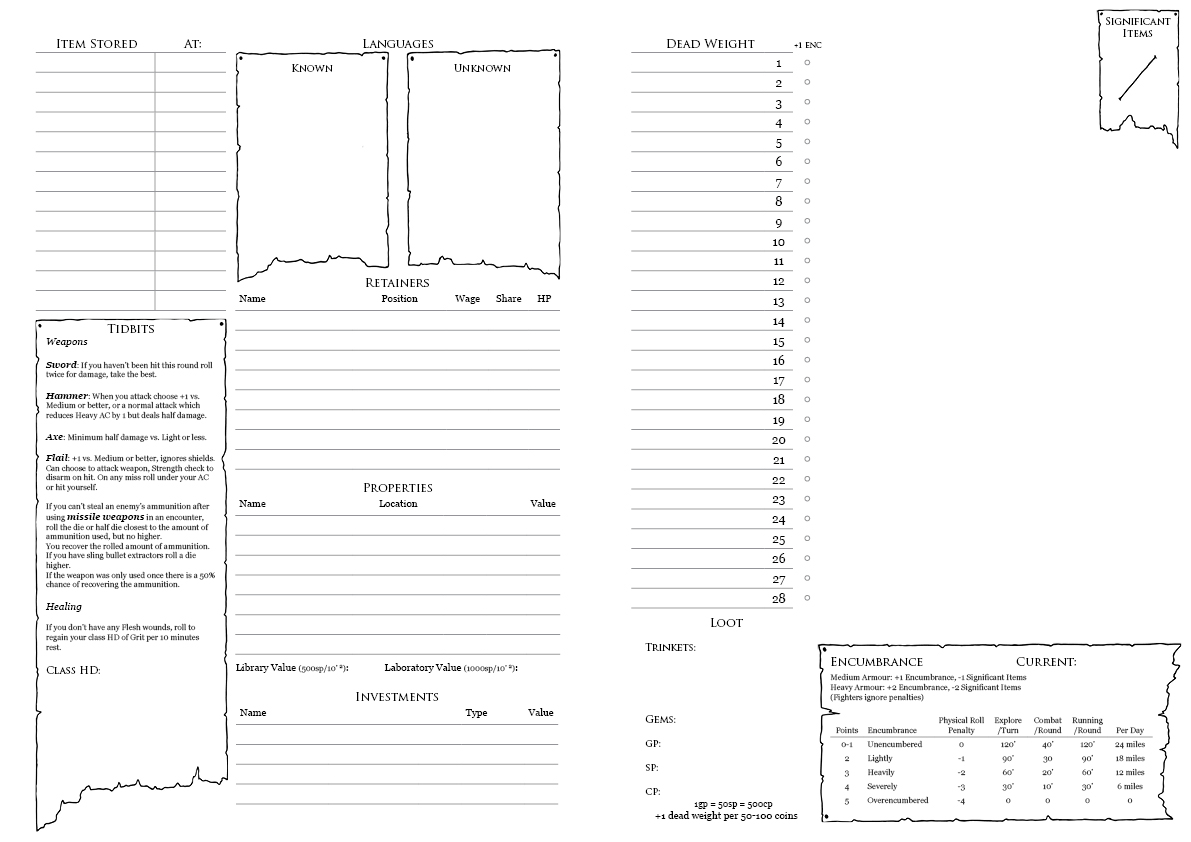
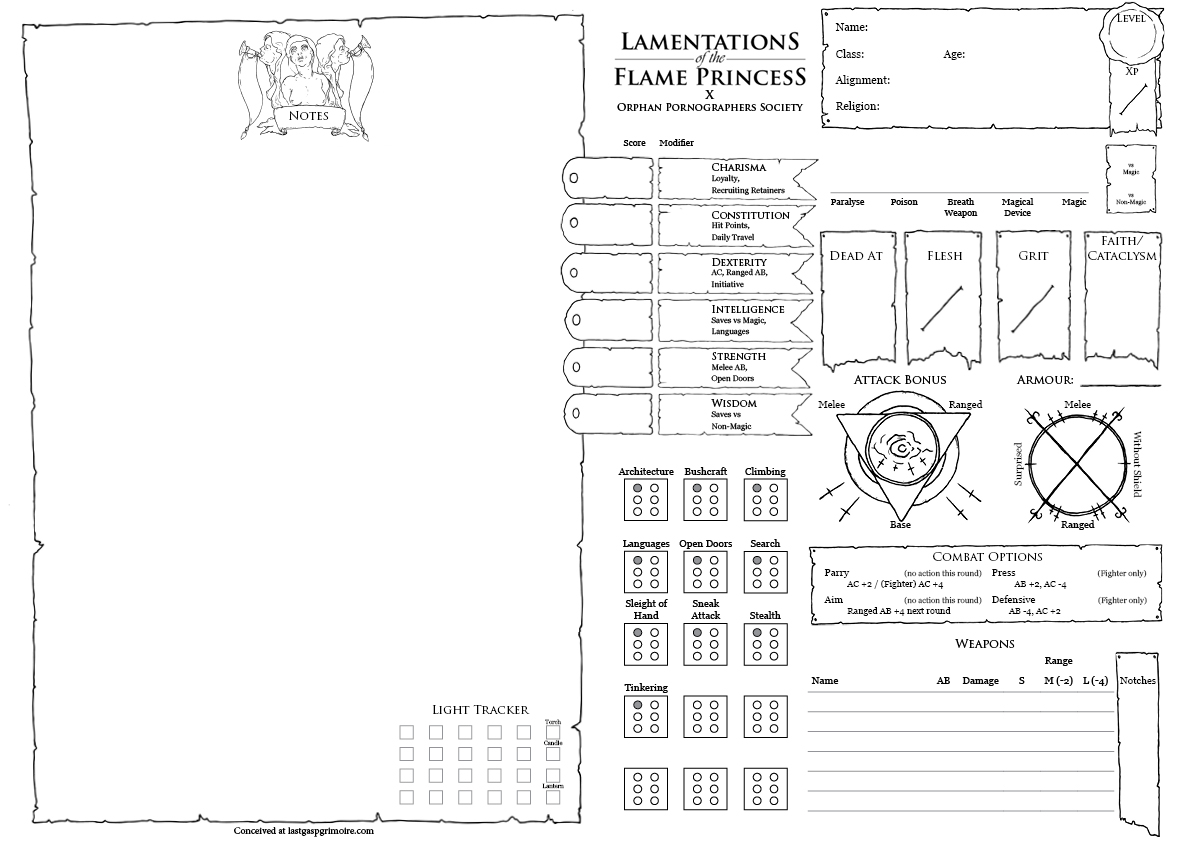
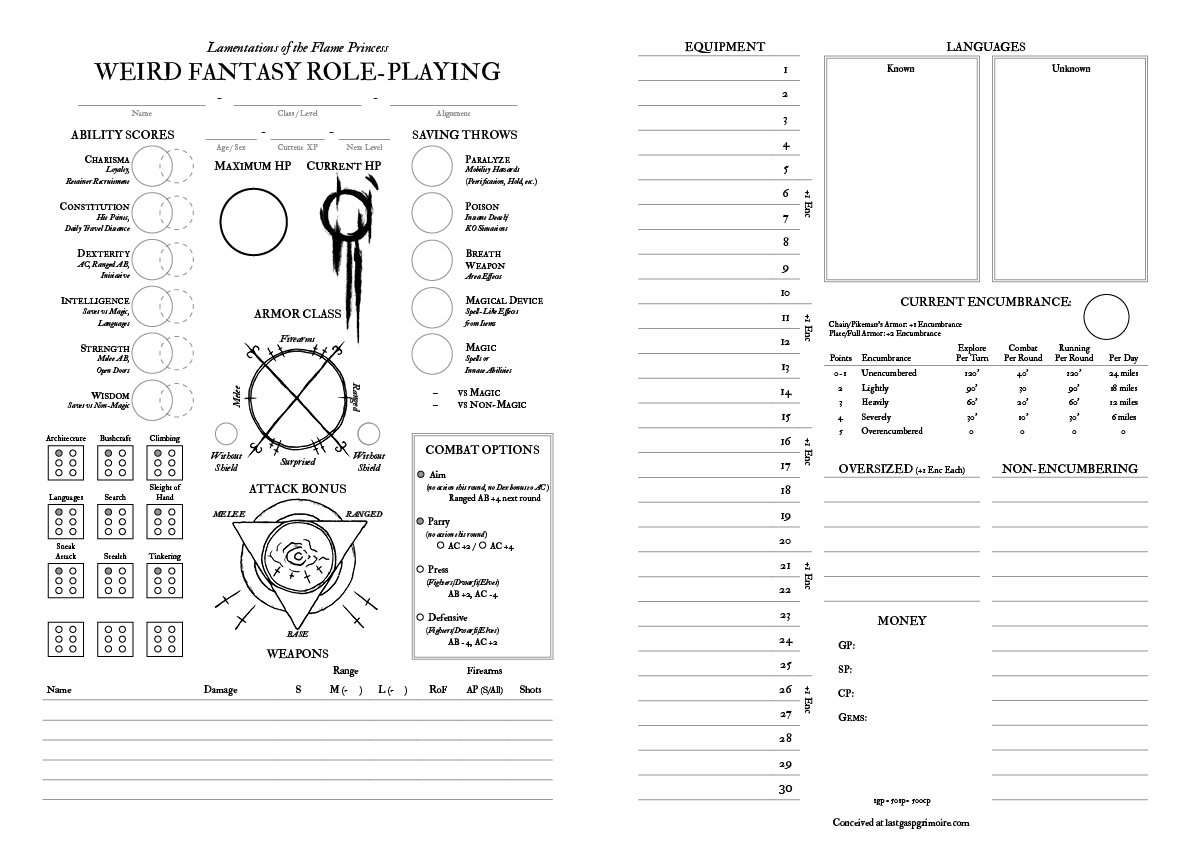
I was digging around looking for - I'm not sure what, to be honest - and managed to come across some really cool characters sheets for Lamentations of the Flame Princess, over at Last Gasp Grimoire.
Source


He (She?) has various designs set up, most of which seem to incorporate some house rules, but also a number of very cool, useful features. My favorite of the lot, aesthetically is easily this one though:

Source
Good character sheets are an art, and this (wo)man has it down. If I ever get the chance to run a Lamentations game straight, I will almost certainly use these. Kudos to you.

Everyone else, go check out their page. It's full of great stuff. 


Saturday, October 18, 2014

I Hate Skills

This is something I've come to realize over the years, as I've both GMed and developed games. It's not universally true, but it very often is:

I hate skills.

As a mechanic, they seem to really bother me, at least in the context of fantasy RPGs. I've seen it done well before - in Burning Wheel, making good use of your extremely specific and obscure skills in combination makes for a flavorful and entertaining game-within-a-game - but for the most part, they are bland. I think I forgive this in sci-fi games, though I'm not sure why. Likely because science fiction by its very nature tends to lend itself more towards the complex realities of the situation. But fantasy? When one looks back at classical fantasy, we never really worried how many ranks Conan had in stealth, or how high Frodo's Survival skill was. Did someone want to check Aragorn's Speechcraft at Helms Deep?

No, I always want to see fantasy characters in broad strokes - as archetypes. I think that is why the genre lends itself so well to class-based systems. Classes are a quick and easy way to define who the character is, what the character knows, and their general problem solving tools. It's a good basis from which to develop a character.

I always feel like skills get in the way, somehow. Once written down as a list, there's a feeling of limitation. This is what I can do. This is what I'm good at. Maybe I can climb tha-- Oh, no. I don't have any ranks. I know, I'll bribe the guard - hm. but I only have rank 2, this could get dicey (a pun!)

Worse, once you begin to make skills for things, players have a terrible habit of looking at their sheets for guidance. If your goal is to keep them immersed in the drama and suspense of the narrative in front of you, then the last thing you want them to do is switch from thinking about the fiction, to thinking about their mechanical options.

For better or worse, this was one of the things I actually really enjoyed about D&D back when we were growing up. We played AD&D, but essentially ignored all of the rules save for the very basics of class, race, combat, and spellcasting. In essence, we were playing B/x, but with more character creation options.

If a question ever came up about if you could do a thing? It was almost always a question of the fiction itself. Forge a sword? Your character was a blacksmith, right? Of course you can. If anything was ever in doubt, we ran with the ability score rolls - equal or under on a d20. If it was really hard, you used half your ability score. If anything would have been "easy" we just let it go. Does your cleric know about church history? Absolutely. The rival church's doctrines? Give me an Int check.

The beauty being that it all remained in the narrative. You were more concerned with the fiction than anything else, and once you get in that mindset most problems tend to lend themselves to inventive solutions.

This is one of the things I'm really coming to enjoy again in our current Lamentations of the Flame Princess / AD&D mashup. The d6 system that it is set up on is a really nice compromise between the almost entirely free form manner in which I handled things growing up, and having to deal with a "real" skill list.