Friday, February 27, 2015

Brawler - A Monk Replacement for AD&D2e

My group has slowly reshaped its home campaign. We started with Lamentations of the Flame Princess, but slowly adopted bits and pieces from everything including class structure from AD&D2e. Some classes have been removed entirely for thematic reasons (No one in our group was big on Druids as treehuggers), and some have been replaced.  I always liked the idea of a monk, but it just doesn't fit the setting we play and has always kind of stuck out as a sore thumb in the D&D milieu. Enter the Brawler.

I picture the brawler as one part greco-roman wrestler, one part just skinhead roughneck looking for a bar fight. I'm imagining table legs flying and chairs breaking. In practice, it's worked out pretty well for our group, but we also aren't the sort that really worries about balance so your mileage my vary.

The following does reference a couple house rules as well. We are playing with 2e Weapon Proficiencies, but when classes are restricted by weapons we've simply categorized weapons as "simple" "martial" etc. Individual weapon proficiencies are still purchased, but the prior categories make it easier to manage. We're also using LotFP specialist style skill points, so you may need to tweak the class to your own setup.

Without further ado:


Brawler 
Ability Requirement: Strength 14, Dexterity 14
Allowed Races: Dwarf, Half-Elf, Half-Orc, Human


Where thieves are often thought of as nimble professionals, brawlers are best characterized as roughnecks, knee-breakers, and thugs. While lacking the pure martial prowess of the warrior classes, Brawlers compensate through dirty-fighting and a raw talent for destruction. Brawlers can be of any alignment, and gain the following special abilities:

The Sweet Science: Nothing makes a brawler happier than sweet sweet pugilism. Their initial unarmed attacks do 1d4 damage, but as they increase in level their capacity for mayhem rises dramatically. They do increased damage per the chart below.

Bonus Attacks: Unlike other members of the Rogue group, Brawlers gain bonus attacks per round similar to the way in which Warrior classes do. These bonus attacks only apply when the character is using Simple Weapons, Improvised Weapons, or unarmed attacks, and only when the character has not moved that round.

Improvised Weapons: Street fights and pub brawls have left the brawler adept at making use of whatever is at hand. Brawlers can make better use of any improvised weapon that is reasonably similar to a weapon they actually have proficiency in without penalty. Thus, a Brawler who has proficiency in Clubs can make easy use of a table leg. A brawler with the dagger proficiency is deadly with a broken bottle in hand. This ability does not give brawlers access to weapons they couldn’t otherwise make use of, such as fighting with a woodsman’s axe without the Battleaxe proficiency.

Bob and Weave: When wearing light or no armor, Brawlers gain double their normal dexterity bonus to AC.

Rogue Skills: Like other members of the Rogue Group, Brawlers gain some points to spend on skills. Unlike some other Rogues though, their combat focus leaves them with a more narrow skillset. They may only spend points in the following skills: Architecture, Climbing, Search, Stealth

At level 3: Brawlers become an even greater threat through unarmed combat. When they attempt any wrestling / grappling maneuver, they double their Strength modifier when calculating grappling rolls.

At Level 5: Brawlers maximize the destructive potential of their surroundings. If they have not moved this round and are armed with a blunt improvised weapon (table leg, beer bottle, chair, whatever), they may opt to give up their normal Attacks Per Round and instead make a single Collateral Damage attack, by breaking said object over the target’s head or back. This attack roll is made as normal, and can even be a ranged attack at whatever range the object can be thrown.

If the attack is successful, the damage is resolved as normal for that class of improvised weapon but has an additional chance to stun the target on a d6 roll of 1-3, noting the difference in HD or level between the Brawler and his target. For every Level the Brawler has above the target’s HD, the chance of success increases by +1. If the target is a higher level than the Brawler, each level or HD of difference reduces the chance by -1 This cannot reduce the chance below 1, or raise it above 6.

Bob decides to break a chair over the head of the party’s Paladin. Bob is level 5 and the Paladin is only level 3, for a 2 level difference. He has a 1-5 chance of stunning the Paladin.

If successful, the target is stunned for the current round, and d3 rounds thereafter. Regardless of success, the item used is completely destroyed in the process. Undead creatures, and creatures immune to critical hits or Backstabs are also immune to Collateral Damage.

At Level 9: the Brawler gains the ability to Sucker Punch their opponents. In order to qualify for a Sucker Punch, their opponent must be either unaware of the Brawler’s presence, unaware that they are about to be attacked, or distracted by another enemy in combat (not currently engaged with or targeting the brawler). If they have not moved that round, they may opt to give up their normal Attacks Per Round and instead deliver a single Sucker Punch to their opponent. The attack is rolled as normal and if successful delivers it normal damage, but has an additional chance to instantly knock their opponent unconscious on a d6 roll of 1. As with Collateral Damage, compare the Brawler’s HD. For every Level the Brawler has above the target’s HD, the chance of success increases by +1. This chance cannot be modified to less than 1.

If successful, the target is immediately knocked unconscious and will remain so for d3 hours. Undead creatures, and creatures immune to critical hits or Backstabs are also immune to Sucker Punch.

Favored Weapons: Simple

LevelXPHit Dice

Save vs.

SkillUnarmedAttacks


(d8)DeathWandChangeBreathSpellPointsDamage/ Round
10113141211152d41
22,00021314121115+1d41
34,00031314121115+1d61
48,00041314121115+1d63/2
516,00051212111013+1d83/2
632,00061212111013+1d83/2
764,00071212111013+1d103/2
8125,00081212111013+1d102
9250,0009111010911+1d102
10500,0009+2111010911+12d62
11750,0009+4111010911+12d62
121,000,0009+6111010911+12d65/2
131,250,0009+8108989+12d85/2
141,500,0009+10108989+12d85/2
151,750,0009+12108989+12d85/2
162,000,0009+1496867+13d63
172,250,0009+1696867+13d63
182,500,0009+1896867+13d63
19+2,750,000+2/lvl84745+1/lvl3d84


It's rough, but I've been enjoying the thematics of it. The abilities are possibly a little overpowered, but entertaining and thematic. The unarmed attack damage gets a little ridiculous, but is actually less ridiculous than the monk class that it was based on.

If anyone tries it, let me know. Hopefully it will inspire someone to something.

Until next time,

Thursday, February 19, 2015

Organizing Campaign Materials

How do you organize your campaign materials? This is a topic that I have always found somewhat frustrating, but particularly so in D&D / OSR games. Over the course of a campaign, you wind up with maps, charts, random tables, dozens of NPCs and monsters, random items and more. The amount of book-keeping here goes up exponentially if you plan something like a sandbox hex-crawl as well. For even a single location, you wind up with a map.

A lot of stuff goes into running a smooth campaign. You know the stuff I'm talking about. As a DM, you wind up with a ton of notes on everything from maps to monsters, NPCs, locations, traps, items and more. If you have something as ambitious as a sandbox hex-crawl, the amount of stuff you wind up taking notes on can go even higher. For a single hex location, you can easily wind up with:
  • The location itself, description and hooks
  • A random encounter table for the area
  • Stats for any monsters / NPCs that are liable to be encountered in the general area.
  • A dungeon or other maps to have pre-sketched out for the encounter(s)
  • A wandering monster chart for that dungeon
  • Notes on each of the traps in that dungeon
  • Special items listed for any of the NPCs or monsters in the area, in the dungeon, or to be found as loot
And it's not unusual to go even further, with weather tables or other random tables for magical nonsense or effects, particularly when those effects are attached to a some form of wondrous character-sheet-altering item in the way of so many old D&D modules.

Now multiply this over even a dozen hexes and you wind up with a huge amount of book-keeping even if many of the tables overlap, and this is without broader more general notes on things like NPC interactions, any kind of developing metaplots, and so forth.

So the question becomes: What do you do with all of this data?

The traditional method often involves a massive DM notebook. It's a tried and true method, granted. It's what DMs have been doing since the hobby began. On the other hand, it does not scale with volume of information at all and I always find myself resenting page-flipping during play. So what are the alternatives?

I've had someone suggest Evernote to me for this purpose. It's a good program, and I use it fairly often already in my personal / professional life. In a lot of ways it will beat a notepad and pen for this kind of thing, but it has some drawbacks as well. I've not found a good way to cross-reference information within the program, which is unfortunate, though it does support the ability to tag entries for later searching.

My chief problem with Evernote is simply that the notebooks lack the ability to sub-divide them well. You only have two organizational layers: a single notepad, or a stack of notepads. This may not be a problem if you are using Evernote exclusively as a DM tool. Unfortunately, as someone who is already using Evernote for an organizational tool, I simply don't have enough subfolder capacity to structure all of my notes in a meaningful fashion.

I've heard some good things about Scrivener as well, but haven't had the chance to play with it much. As it's supposed to be writer's software, I'm hopeful and probably need to get it just for my day job. Unfortunately, I am cheap so that's a dream for another day.

Malloy's Ultimate DM Client
If I were going to design a custom DM client for this nonsense, what would I want out of it? Consider this a DM's wet-dream checklist of features to make me love you forever. I lack the programming skills to create this myself, but if someone does, somewhere out there, you will make a killing.
  •  Modular entries / Inboxing: the entire system boils down to an extremely versatile list manager and note card system. I need to be able to open a new note card on the fly and have it automatically drop into an inbox where I can sort it at my leisure, thus keeping the system flexible enough that I can use it during the game itself. These note cards would be the heart of the whole program.
  • Searchable Tags: I need to be able to tag each note card with whatever I want it to be, and have a method of searching those tags. If I write down the data for a thing and call it "Monster," "Forest," "Shapeshifter," I should be able to search any of those tags and bring up every entry containing that specific tag. This would make having to wing elements mid-session so much easier, for cases when you just don't have something prepared.
  • Playlists: In many ways, it helps to imagine the system something like iTunes - well, how iTunes was a few years ago, these days it's just frustrating. Like songs in iTunes, the individual note card lives somewhere in the file system of the program, but you can access it by pulling up a tag, accessing it alphabetically, or by creating specific Lists of things. One could simply have a playlist that is "NPCs in Region X." Or whatever else. The ability to organize these playlists into folders would make this extremely useful.
  • Extremely good cross referencing: Likewise, the ultimate use of this nonsense would be to be able to link to other notes within a given note. If I have an NPC who has Item of Wondrous Property+2, I want to be able to click that item in the notes for that NPC and bring up its associated note. Once you have this included, the entire system becomes extremely useful. Your notes themselves can simply be links to other notes, creating the beautiful situation where I can have a note called "Random Encounters for the North Woods" and have an ordered table where each of the results link to the note in question. 
If the above were produced in a way that was user-friendly enough for the average person to be able to populate and run without tearing their hair out, you would already convince a great many people to love you forever. However, if you want to really win the prize of Ultimate DM Client, consider the following features to implement:
  • Virtual Dice: A lot of programs have a virtual dice roller built in, but if you're going to make a DM client, you might as well add this. This isn't so much because DMs will want to use these over physical dice on the table, but because it allows for other useful things such as...
  • Integrated Random Tables: If a note is tagged as a random table, you can hit a button and it will automatically roll the table and highlight the result. If the result is a linked note, it can be set to automatically open it for you.
  • Combat Tracker: Allows Monster / NPC notes to be "activated" and placed on a tracker that is simply a vertical stack of some kind that can be arranged in order of initiative. Activating 4 of the "bugbear" note card would simply stick 4 tokens labeled Bugbear on the initiative tracker, with a space beside them that will have their default HP listed, and HP remaining. Add your PCs and their hirelings to the combat tracker, and keeping track of initiative becomes silly easy.
  • Hit Die Generator: Allow notes tagged Monster or NPC to be listed with random HP. When you activate them as above, it will use the virtual dice to properly generate random HP for them.
  • Random Name Generator: exactly what it says on the tin. By default, should offer "generic fantasy" names, and then specific lists for Elves, Dwarves, Orcs, and maybe by theme: Norse, Greek, African, etc. Make these lists editable so DMs can add in their own entries, and make it so they can make entirely new lists if they choose. Pro Tier? Let these random names auto-populate randomly generated monsters activated in the Combat Tracker.
  • XP calculator: If an NPC or monster is tagged as giving XP when killed, the Combat Tracker will automatically tally how much killing it is worth over the course of the battle. If you've got 5 orcs worth 30xp each, as you click "defeated" on each one, the Combat Tracker will keep an updated count of how much XP was earned.  
  • Hexcrawl Organization: Load a map image and set it as a hex map. Will automatically apply hexes overtop of the map.  Each hex is now a clickable, and will open the relevant note or playlist associated with it.  Thus, I can click hex A21 and it will open my playlist of notes I have associated with it. When my players go to A21, with one click I have access to my random encounter tables, relevant NPCs in the area, any maps or encounters I had planned for the place, and so on. I can populate an entire sandbox with information only have to deal with what I need when I need it. Seriously, do this. 
I envision the glorious experience of sitting down to a session with my rulebooks, a laptop, and this program opened. My players veer off-course and explore some area I hadn't planned on today, but that's fine. I've already set up the map for it.

They arrive at a section of woods and I click on my hex map, bringing it up. It launches the playlist of notes for the area. I have my wandering encounter table, weather tables, important locations in the area, maps, NPCs, the works. They decide to poke at some ruins there, so I bring up the ruins notecard. I've got important details and descriptions, all of the associated random tables. I have the map of the ruins themselves, with internally linked references to the notes for each of the traps, monsters, treasures and salvagables within the ruins themselves. After some time, I decide to check for a wandering encounter. I pull up the integrated wandering encounter table specific to the ruins and click auto-roll. It brings up the entry for an NPC warband I had planned on introducing at some point. I throw them into the combat tracker and notice one of them has a magical sword whose properties I can't remember off-hand. Click. Got it. I roll to see if either side was surprised, and begin. 

In 2-3 clicks, I have everything at my fingertips for anything I could possibly want for the session. If the party goes completely off the menu for some reason and gets to an area I had completely forgotten to prepare for? They are in the woods. I'm just going to search for the Forest tag and see what all I have laying around.

And even better: when preparing for these things in the first place, I can literally just import any NPC/Monster/Item/Spell/whatever I find interesting and keep it all in a growing database. When I'm setting up a new cave/dungeon/whatever, I have literally everything at my fingertips, just a search away.

It would be the ultimate setup.

Now, where do I find an ambitious programmer when I need one?

Until next time,

Tuesday, February 17, 2015

Orc Quest: Episode 4 - Queen of the Orcs

When last we left our brave heroes, they had their target in sight. The band of orcs that had raided their raid would soon themselves be raided, and tribal honor restored.

While our heroes were outnumbered more than two-to-one, Cunnin lived up to his namesake and offered a plan. Taz Dingo would be sent into the woods ahead of them and create a distraction, leading some of the orcs away from their camp and allowing the rest of the party to set upon whomever remained. The plan was set and simple. The plan was then explained a second time for raph's benefit, explicitly highlighting his own roll in the simplest terms: For every enemy orc you kill, you will receive two Oreos.

With that, the plan was set in motion. Cunnin crept into position. Taz moved around the outer perimeter, hidden from view. Justice and Raph came up the back, the wolves in tow. The young human girl (who had been by now given the good and honorable orc name Tuska, after an orcish hero of old) was left in a safe place to watch over their gear, keeping both her from harm and their things from slowing them down.

Unfortunately, rather than run into the woods and make noise to get the orcs to follow Taz misunderstood the plan and began drawing their attention from the edge of their own camp. The rest of the party sprang into action. Justice threw dried rations at the enemy orcs still by the fire, sending the hungry wolves barreling down at them.

Several orcs moved to intercept Taz, but Justice moved in to intercept. Moments later, the great green behemoth came plowing through their ranks, shouting "I came in like a Raaaaaaaaaaaaphing ball" and crushing all that stood before him. Kidneyshanks moved around behind the tents, carefully picking his moment. It was from this perspective that he was the first to see a giant of an orc among their party - a figure who could be none other than the enemy's warboss.

The brutal melee lasted for several long moments before the Warboss was on Justice and their struggle was terrible to behold. Cunnin came in from behind, trying to sink his short-sword between enemy ribs but was rebuffed by sturdy leather armor. The boss turned on Cunnin, sword raised high -- when the broken body of another orc hurdled through the air and smashed into him, toppling them both to the ground. Raph looked on at his makeshift projectile with a satisfied grin.

The Warboss reeled, bloody and dazed. Crossbow in hand now, Cunnin shouted for him to surrender. When the warboss refused, a bolt burried itself in his shoulder, obliterating a ball-joint and causing him to drop his sword. At the second command to surrender, the warboss relented. The remaining Orc stood down, too drunken and injured to refuse.

The latter was bound and sat by a tent until he could be dealt with. Raph's fee was tallied and his account settled. The defeated warboss was thoroughly questioned, his reluctance to speak overcome through a means of coercion too grizzly and disturbing to be described here. (Raph cuddled him, alright? It was awful. There was snuggling.)

Caving to cruel psychological torture, the Warboss revealed that he was in service to an Orc Queen that was coming to power, one more fearsome than any warboss that had come before. She styled herself The Matriarch, and would unite all orc-kind under her heel.

Troubled by this news, Justice, Taz, and Cunnin held council while Raph made sure the prisoners stayed put. At some length, it was decided that our heroes had no wish to become part of The Matriarchy, and that they would have to find the Orc Queen and assess the true nature of their foe. Of the captives, the choice was difficult but necessary. Prisoners would only slow them down, and to leave a defeated orc alive was to guarantee that they would seek revenge.

Cunnin approached the Warboss and apologized simply. "I'm sorry, but there is an account to settle." He placed a bolt through the warboss's brain-pan, giving him the most painless death he could.

This left the remaining prisoner, of whom it was decided would be an offering to Gruumsh, one-eyed. The prisoner was given several swigs of their best whiskey, and ultimately went willingly to his death, hanged upon a high branch and ended with a spear.

Tuska and their belongings were fetched from the hiding place down the way, and they made camp in the defeated orcs tents. Once the belongings were searched, several trinkets were found, including a strange shield made of granite, a fine sword and a strange golden necklace. Of these, the necklace became most important, the center ruby in it shimmering.

The necklace was placed around Raph's neck for testing. Nothing happened for a long time, but as he played with the medallion, his eyes rolled back and he fell to the ground unconscious. When he recovered, he related a vision of a great female orc who both grew and shrank in size. Before her were hundreds of orcs (maybe, Raph isn't great with numbers) all shouting and chanting her name. Orc-pra! Orc-pra! Orc-pra! Orc-pra!

Upon further questioning, he related that it was outside in a warm place where no snow had fallen. With nothing else to go on, that set our course south. South we shall go.

Until next time.

Thursday, February 5, 2015

Band of Bastards: Working Cover

Something I've been working on lately, and I'm exceptionally excited about - I managed to throw together the cover layout for the Band of Bastards book. Well. Sort of.

This is an experimental cover that I'll show on it's own merits before I bother explaining it. Just for a moment click it, enlarge it, and take it in. Bask in it. Bask.


This is an experimental cover. I think it was Luke Crane that really advised for an indie-dev to sit down and really invest in some nice cover art, more than anything else, because you're going to use that cover art for publicity and marketing again and again and again. In theory, the investment should pay off in spades. It is, after all, the face of your game.

The thing for me though is that I've never much cared for the art on the cover of a book. At best, I nod and go "oh, neat." and move on. At best, it helps me identify the specific genre (Oh, she's wearing a bronze breastplate, this must be a set in antiquity), but I'm far more likely to totally ignore it, or be actively turned off by it.

Conventional wisdom demands one place a certain kind of artwork on their cover. Usually this is either a collection of the characters on the front, hoping to speak to "this is what you can be," or some kind of scene on the front depicting the nature of the game - for fantasy games, this is usually someone fighting some kind of monster.

I think the problem for me has always been that when it comes down to it, I have no investment in what's happening on the cover. This is not my character, that's not my story. Since the overwhelming majority of my campaigns are home-brewed, I'm generally not even looking to the cover for atmosphere.

The above cover was my thought on "what if we tried something different?" I intentionally gave it that "old book" look, and I think the details came out very well. The leather texture, the binding, the faux gold leaf. It would in fact make for one sexy glossy hardback, and look gorgeous on a shelf. I even love the fact that it doesn't immediately look like another fantasy RPG book - but it does look intriguing.

On the other hand, this could all be one man's eccentricity again. By publishing time, you might have exactly what you expect in an RPG book - some dashing scene of blood and swordsmanship.

For now, I'm going to sit back and enjoy it.

Regards, 

Thursday, January 29, 2015

Lars Andersen and Historical Archery

There is a video floating around that has gotten a good deal of attention lately. In addition to 22 million views, I've gotten a couple questions about it myself. One of which on the Grand Heresy Forums. I responded some there, but I thought I would elaborate and provide a more thoughtful answer here.

I'll start off with the same disclaimer I've made before. The video is very interesting to watch. Lars Andersen is an extremely talented archer, and nothing I say here is to discredit that skill. The issue I take is passing off extremely impressive trick shooting as battlefield archery. He can do some very cool things, but not necessarily things that are of practical martial application.

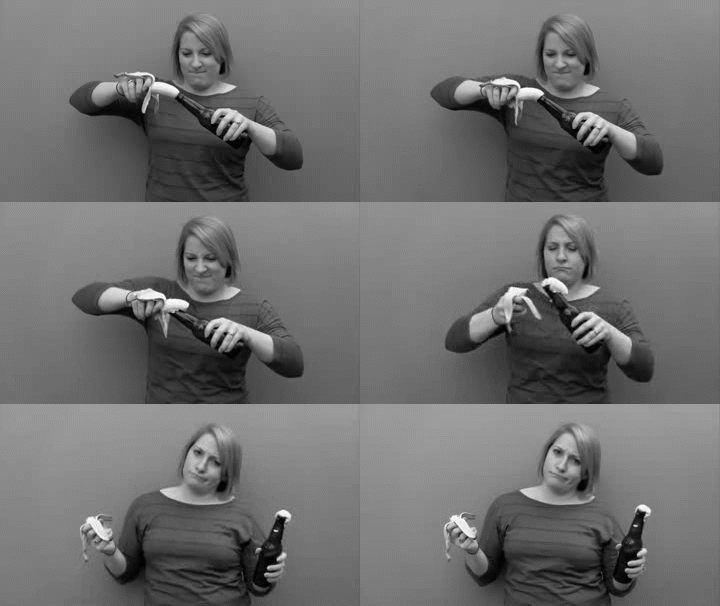
I'll say up front that I'm not a fan of the tone the video takes. The thing pitches itself like an infomercial, making sensationalist claims about "uncovered secrets" and playing along the "myths debunked! everything you know is wrong!!!@!1" kind of nonsense. This is complete with the exaggerated incompetence you expect from a 4am infomercial. I half expected a transition to black and white film wherein a woman would unsuccessfully try to cut a banana by mashing it with the flat of a kitchen knife. With dramatic music, a voice-over would shout "BANANAS GOT YOU DOWN?"


"WELL WORRY NO MORE! WITH THE BANAMATIC™ HOME BANANA SLICING SYSTEM, YOUR BANANA SLICING TROUBLES ARE OVER!"

There some important things to realize when dealing with the claims made in the video. First, despite the imagery used, archery is no more monolithic and uniform an art than is swordsmanship. Every culture has developed its own weapons and means to use them, and this includes archery. The Egyptians were using different bows and techniques than the mounted Huns were, or the Mary Rose era longbow archers. This is no different than the way the Norse broadsword, Japanese katana, and Italian rapier were each different in their use. They were different weapons, with different purposes, taught by different cultures for use in overcoming the different challenges they would face.

Much of what he is demonstrating is out of the Arabic tradition, which used the smaller bows that were used throughout the east, developing out of horseback archery. Horseback archery in the east had a very specific character, often riding into relatively close ranges, launching a series of arrows and getting back out. Their bows were compact, nimble, and relatively moderate draw weight. The opponents they fought were usually very lightly armored.

In the west, military archery is a long range affair with thousands of archers in block formation firing on other block formations at 300 yards or more with heavy powered bows. Mike Loades has credited the Mary Rose era bows as being 100-120lbs or more. I believe one gentleman on Weapons that Made Britain was actually demonstrated loosing a massive 150lbs draw weight bow. This is no small feat. These were weapons firing heavy projectiles at extremely long range to overcome thick maille and plate armor. The bows were often too long to comfortably use on horseback, and the higher poundage bows required a full-body exertion to draw properly.


Seriously. We can identify the bodies of English longbowman by their deformed spines and enlarged left arms.

This isn't to say that western archers never fought while mobile or skirmished. Robin Hood has a lot of basis in fact, as it turns out. Mounted archers of a sort also existed in the west, but in the manner of later mounted infantry, not fighting mounted but instead using the horse only for mobility to get into (and retreat from) a position.

We are talking about different weapons systems, different purposes, with different methods of deployment.


Aside from the historical issues, there is a secondary claim that is a theme throughout the video. Much is made about the speed with which he looses his arrows, even going so far as to show footage of his drawing juxtaposed to the drawing of other archers. What he fails to mention is that he achieves this speed by not drawing the bow back more than a few inches. If you watch closely, he very rarely draws the bow back more than a quarter of the way at any point in the video. This makes for impressive speed, and can probably put a lot of arrows on target, but you make major sacrifices in range and power in doing so.

He does some really cool stuff with it, but I would be extremely surprised if it would deliver anything approaching the kind of force you would need to put someone down through even a padded jack at 50 yards.

I'll state it again. It's an awesome video, and he does some really impressive trick shooting. You could even argue that the trick shots have some basis in history, in that professional archers even then probably developed the ability to do similar feats to show off to their friends. Some things never change. But the claims he can make and apply to his trick shooting don't really apply to any kind of martial archery.

Until next time, 

Sunday, January 18, 2015

Orc Quest: Episode 3 - Pack Leader

When we last left our heroes, they set off on the trail of adventure and revenge. Four orcs, one cat, and one human riding Hodor style on Raph's back in a makeshift harness.

The trail wound for some time, with smalltalk had in the interim. A debate sprang up between Cunnin and Justice about the proper territorial procedures of raiding another tribes raid, under what circumstances it could be permissible and what etiquette would be required. As most discussions go on the natural rights of Orc, this one was stopped short by a blood-curdling howl. In the distance, our heroes became aware of a half-dozen wolves, larger than those that normally prowl these areas. They began to draw closer, threatening to encircle.

This was when Taz Dingo volunteered, to the amusement of his comrades. "I've got this."

With that, he approached the largest of the wolves and decided he would attempt to challenge said animal for dominance.

It was at this time that Cunnin and Justice began placing bets on whether or not their comrade would be brutally torn to shreds, while shouting helpful advice such as "Stare him down! they love that."

As the wolf began snarling and circling, the bets were ammended to not whether Taz would be eaten, but how quickly.

A failed charisma check later, the wolf leaped into action. Cunnin loosed his crossbow at the beast's heart, sending his deadly bolt flying predictably some harmless distance into the woods. Raph readied himself to charge in, but Justice placed a restraining hand on his shoulder. "No. This is something Taz has to do for himself."

A wrestling roll later had Taz in the underdog position, and the bets were further amended as to whether or not Taz would instead become a member of the wolf-pack by marriage. Fortunately, before the subject of tribe-to-pack dowry arrangements could be broached, Taz gained the upper hand, ultimately pinning the alpha wolf and.. uh.. establishing his dominance.

Their tribe mate returned triumphant, with several wolves now in tow - the members of his pack. Unable to look him in the eye, half-hearted congratulations were issued. While no one could now remember exactly who bet what over the affair, Cunnin convinced both Raph and Justice that he had in fact won, and collected a dozen silver as his just due.

The now larger party traveled some distance before coming across signs of the orcs they sought. Cunnin scouted ahead, miraculously pulling off a stealth roll and making his way across the brush to observe their camp. Making his way back without incident, he shared his observations:

"Eight of them, maybe nine. Most drunk around their campfire."

Invoking the god of Brutal Cunning, he came up with a plan..

Until next time,

Wednesday, January 14, 2015

Now Back to Your Regularly Scheduled Programming


The last couple months have been rather crazy. November lead to a much-needed break, and as is often the case, December found me busy with familial obligations. The beginning of January saw me with a 103 degree fever and a Nyquil-induced-coma, but once again I am here and doing what I do.

Future plans of the blog are to put out a post per week, with several more or less worked out and waiting in the wings at the moment. Lately, my attention has been diverted heavily into Grand Heresy business, with very exciting things going on. My fever-addled delirium brought about a handful of new ideas and solutions to some long-standing bugs for Band of Bastards. Writing, re-writing and editing continues to be an all-consuming task, but we are making our way through. This is the hour when discipline for the subject becomes of utmost importance. Meanwhile, my list of "one day" projects sits a mile long, tempting me with their puppy-eyed promises of fun and creativity. I must resist. I will resist.

We will see this book finished.

In other news, the first drafts of some cover ideas have been floating around recently including one mock-up that I'm rather proud of. Whether it is the direction we will go in is yet to be scene, but I rather like it regardless. More on that later.

For now, we are back to our regularly scheduled programming of rambling insights and RPG related dev commentary and development.

Until next time,